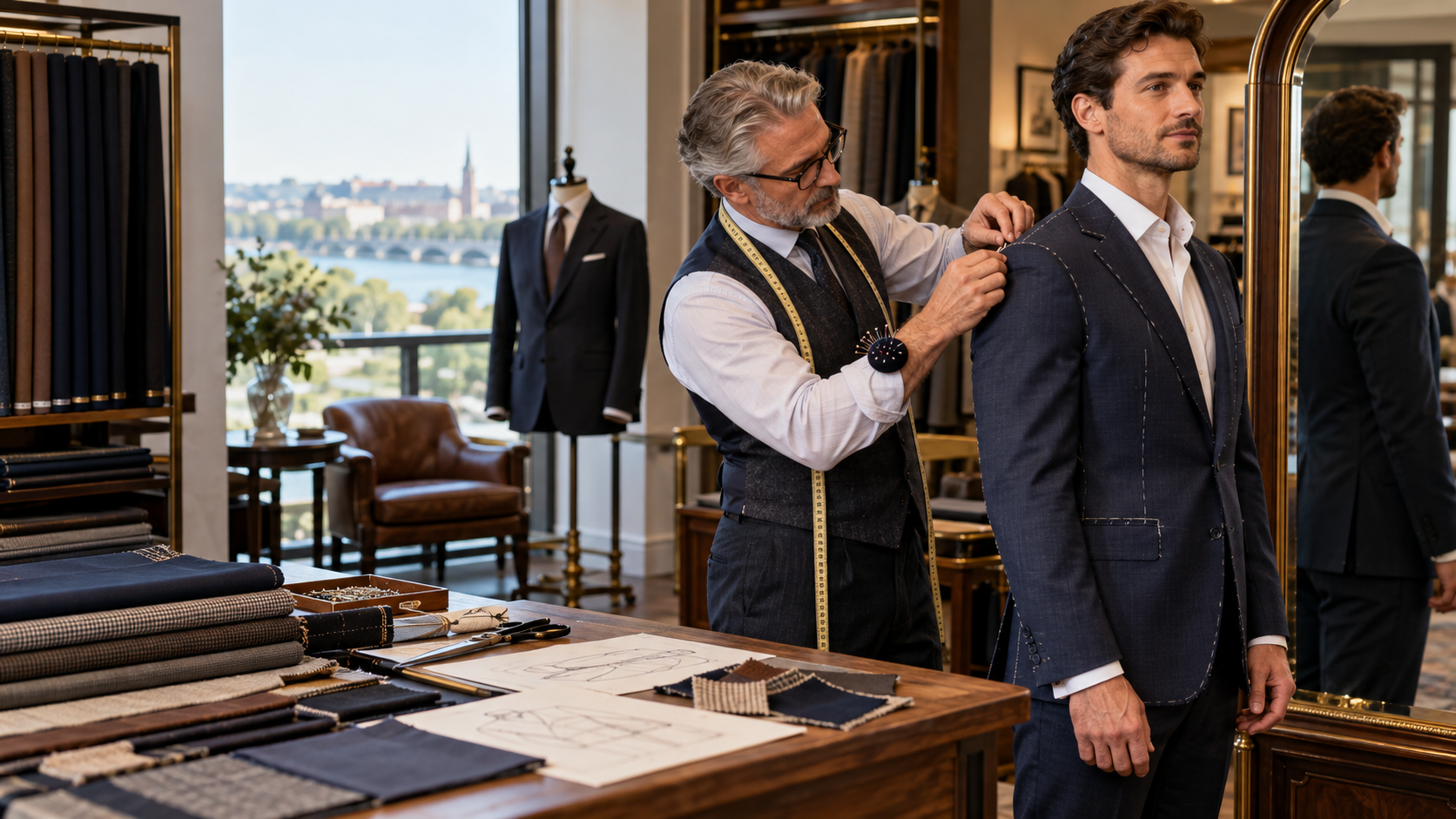
A suit can look great on a hanger and still feel wrong when you put it on. Maybe the jacket pulls across your shoulders, the sleeves feel too long, or the trousers never sit quite right. These are the kinds of problems a custom suit fitting can help solve.
But if you’ve never visited a tailor before, you might wonder what actually happens during the appointment. What should you wear? How are your measurements taken? And how many fittings will you need?
At BARG Garments in Alexandria, VA, the custom suit fitting process starts with a personal consultation and continues through measurements, a trial garment and a final fit check.
Here’s what to expect, how to prepare and what you should pay attention to before taking your finished suit home.
What Is a Custom Suit Fitting?
A custom suit fitting is an appointment where your tailor takes measurements or checks how a garment fits your body. The goal is to create a suit that matches your proportions, preferred style and comfort needs.
Your tailor looks beyond basic chest and waist measurements. They also consider your posture, shoulder position and how the garment moves when you sit, stand or walk.
Unlike a ready-made suit, a bespoke suit allows the tailor to refine the garment around your individual fit requirements.
The process usually involves more than one stage. Your initial consultation establishes the design and measurements, while the trial fitting helps your tailor identify adjustments before completing the final suit.
What to Bring to Your First Suit Fitting
You don’t need to dress formally for your first appointment. However, bringing a few useful items can help your tailor make better fitting decisions.
Consider bringing:
- A dress shirt similar to the one you’ll wear with your suit.
- Your preferred dress shoes, especially if you’re ordering trousers.
- Photos showing the jacket shape, fabric or style you like.
- Details about your wedding, work event or other occasion.
Your shoes are particularly useful when checking trouser length. Different shoe styles can change how the fabric falls over your footwear.
If you’re ordering a wedding suit, let your tailor know the date, venue and dress code.
You should also mention any problems you’ve had with previous suits. Perhaps jackets feel tight around your arms, or you struggle to find trousers that fit both your waist and thighs.
These details give your tailor a clearer idea of what you need.
How the Custom Suit Fitting Process Works
At BARG Garments, Reza Mohammadi and the tailoring team guide clients through the design, measurement and fitting stages. The studio uses a test garment to refine the fit before producing the finished suit in the selected fabric.
Step 1: Consultation and Design
Your first appointment begins with a conversation about the suit you want.
Reza discusses how you plan to wear it, what styles you prefer and how much you’d like to spend. A suit for everyday office wear may need different fabric and construction choices than one for a summer wedding.
You’ll review fabric samples and choose details such as lapel width, buttons, pockets, lining and jacket construction.
For example, BARG offers half-canvas and full-canvas construction. Your tailor can explain how each option affects the jacket’s structure, feel and appearance.
You’ll also receive guidance on your fabric and design choices before confirming your order.
Don’t worry if you don’t know the difference between every lapel style or fabric. Bring a few reference photos or explain what you like about suits you’ve worn before.
Step 2: Taking Your Measurements
Once you’ve discussed the design, your tailor takes the measurements needed to create your suit.
These include your chest, shoulders, waist, arms, hips and trouser length. Your tailor also checks how you naturally stand and carry your body.
Two people can have similar measurements but need different adjustments. One might have slightly sloping shoulders, while the other may need more room across the upper back.
That’s why your tailor looks at posture and body proportions instead of relying on measurements alone.
Stand naturally during this stage. You don’t need to straighten your back more than usual or hold your stomach in.
The aim is to create a garment that fits comfortably when you move through your normal day.
Step 3: The Trial Garment Fitting
The trial fitting is one of the most useful stages of the bespoke suit fitting process.
Before cutting your selected final fabric, BARG creates an initial garment using test fabric. This gives your tailor a chance to assess the garment’s balance, proportions and comfort.
During the fitting, Reza checks how the jacket sits across your shoulders, chest and waist. He also examines the trousers and how the complete garment falls on your body.
Any necessary adjustments help refine the pattern before the final suit is made.
You should move naturally during this appointment. Sit down, walk around and raise your arms.
A jacket might look right while you’re standing in front of a mirror but feel uncomfortable when you reach forward.
If something pulls, feels restrictive or doesn’t sit the way you expected, speak up. This is the right time to discuss it.
Step 4: Final Fitting and Adjustments
After the trial fitting, your tailor uses the refined pattern and your chosen fabric to create the finished suit.
At the final appointment, you’ll try on the garment and review its fit.
Your tailor checks the jacket’s balance, sleeve length, trouser length and overall appearance. You’ll also have a chance to see how the suit looks with your intended shirt and shoes.
If anything needs further adjustment, discuss it before taking the garment home.
BARG Garments’ Custom Fit Guarantee includes additional alterations when necessary to achieve the agreed fit.
How Should a Custom Suit Fit?
A well-fitted suit should follow your body without making everyday movement uncomfortable.
The exact fit depends on your personal style. A slim-fitting jacket will feel different from a more relaxed design, but neither should create unnecessary tension.
During your fitting, pay attention to these areas:
- Shoulders: The jacket should sit naturally without noticeable bunching or overhang.
- Chest: You should be able to button the jacket without excessive pulling.
- Sleeves: The length should work with your shirt, and the armholes should allow comfortable movement.
- Trousers: The waist should feel secure, while the seat and thighs should allow you to sit comfortably.
Don’t judge the fit only by how it looks in the mirror.
If you’ll wear your suit for long working days in Alexandria or Washington, DC, make sure it feels comfortable when sitting, walking and moving your arms.
Choosing Fabric for Your Suit
Fabric selection is part of the fitting process because different materials can affect how a suit feels, drapes and wears.
Think about when and where you’ll wear your suit.
Medium-weight wool can work well for a versatile business suit. For a warm-weather wedding, you might prefer a lighter fabric and a more breathable construction.
Heavier wool fabrics can provide more warmth during colder months.
Don’t choose a fabric based only on its Super number. That number describes wool fiber fineness, not the finished fabric’s weight or how warm the suit will feel.
Compare the fabric’s weight, texture, drape and appearance before making your decision.
How Long Does a Custom Suit Fitting Take?
The complete tailoring process takes longer than the fitting appointment itself.
At BARG Garments, a custom suit typically takes four to five weeks from order to completion. The timeline can vary depending on fabric availability, design details and adjustments.
Your consultation, trial fitting and final fit check may take place on separate days.
If you need a suit for a wedding or another important event, discuss your deadline during the initial consultation.
Booking early gives you more flexibility if your tailor needs to make additional adjustments.
Frequently Asked Questions
1. How many fittings do you need for a custom suit?
The number depends on the tailoring process and whether the garment needs additional adjustments.
At BARG Garments, one dedicated fitting is typically required. The overall process also includes an initial consultation and a final fit check, which may involve separate appointments.
During the trial fitting, your tailor checks the test garment and identifies any changes needed before completing your suit.
Additional appointments may be necessary if the finished garment requires further adjustments. Your tailor can explain the expected schedule during your consultation.
2. What should I wear to my first custom suit fitting?
Wear comfortable clothes that are easy to change out of. Bring a dress shirt and the shoes you intend to wear with your finished suit, if you have them.
These items help your tailor assess the jacket sleeves and trouser length.
If you’re ordering a wedding suit, you can also bring photos of your preferred outfit or details about the wedding dress code.
You don’t need to wear a complete suit to your appointment. The most useful thing you can bring is a clear idea of how you want your new suit to look and feel.
3. Should a custom suit feel tight during the first fitting?
A trial garment may not fit exactly as you want because your tailor is still refining its shape.
However, you shouldn’t ignore significant tightness or restricted movement.
Tell your tailor if the jacket pulls across your chest, feels uncomfortable around your arms or restricts you when sitting.
Your tailor can assess whether the garment needs more room or a change in its balance.
A custom suit should match your preferred silhouette while allowing you to move comfortably. You shouldn’t need to maintain an unnatural posture to make it fit.
4. Can I change my suit design after the first fitting?
Some changes may be possible, but it depends on the garment’s construction and how far production has progressed.
Small fit adjustments are generally easier than major design changes. Changing the lapel style, fabric or overall jacket structure may be difficult once your tailor has started cutting or constructing the final garment.
It’s best to finalize your main design choices during the consultation.
If you change your mind later, speak with your tailor as soon as possible. They can explain which adjustments remain practical and whether they affect the cost or completion date.
5. How far in advance should I book a wedding suit fitting?
For a wedding suit, aim to book your initial consultation at least six to eight weeks before the wedding, if your schedule allows.
This gives you time to choose the design, review fabric options, attend the fitting and make any necessary adjustments.
BARG Garments typically completes custom suits in four to five weeks, but individual orders may take longer depending on their requirements.
If your wedding is approaching sooner, contact the studio and explain your deadline. The tailoring team can review your requirements and confirm whether they can accommodate your schedule.
Book Your Custom Suit Fitting at BARG Garments
Your first fitting should help you understand what makes a suit comfortable, how the tailoring process works and which details matter most for your personal style.
At BARG Garments, Reza Mohammadi brings more than 25 years of tailoring experience to custom clothing for clients in Alexandria, Arlington and the Washington, DC area.
Whether you’re ordering your first business suit or preparing for your wedding, the team can guide you through the design and fitting process.
Explore our custom suits in Alexandria, VA orbook your complimentary consultation at our Old Town Alexandria studio.
BARG Garments
108 N Alfred Street, Alexandria, VA 22314
Phone: (470) 894-4689
Leave a Reply